Album Review - “THE BLACK BOX” by Kevin Anglade
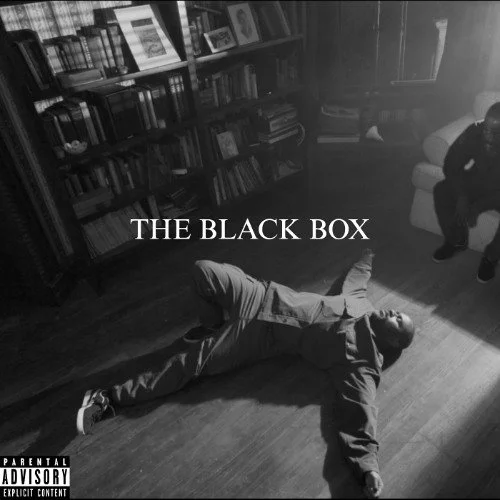
Black and white photos of historical Black figures like Malcom X, MLK Jr., and Rosa Parks always invoke an interesting, yet weird emotional reflex. Is it the survivor's guilt? Pride? A reminder of our privilege? Or how far we have to go? Whatever the case, the reminder is that you feel anything but nothing. For Kevin Anglade and his album THE BLACK BOX, his lyrical output is designed to charge these emotions at a staggering rate, placing the proverbial mirror in front of America's face to identify every blemish, scar, and pimple that no amount of mascara could cover.
Between his distaste for the often corrupt American legal system, overall Black strife, and the daily challenges that plague the human experience, Anglade is the perfect author for a country's exposé. His lyrical strategy centers around these challenges, providing an educational wordflow, while managing to weave a story that is relatable to us, if not us, then someone extremely close to us.
According to the album’s description, “THE BLACK BOX investigates the idea of solitary confinement within the paradigm of American white supremacy and how it works diligently to disenfranchise Black life. In other words, an album about drugs and mass incarceration and its effect on the Black family.”
No better song captures this feeling than the project’s third song, “Undesirable,” which sees Anglade talk about the challenges of being a hustler with the ever-looming danger of the police, who can ruin one's life at a moment’s notice. While this song is far from a one-off, the admirable thing about Anglade is that he approaches each of these scenarios without repeating the same angle. That is perhaps the toughest challenge of the project, which has 14 songs (one interlude) and over 40 minutes of content.
Where the album plays to the traditional hip-hop building blocks beyond the subject matter is in its production, which elects to remain simple background characters to boom-baptism. For hip-hop traditionalists, anything commercial is often scrutinized or shot down with prejudice. One could argue that this is the case of THE BLACK BOX, where production plays a role in simply doing enough to keep Anglade on track, which it does without dancing too much or distracting you from the topic at hand. It’s a safeguard fence that guides him without losing him or you, the listener.
Topic-wise, Anglade is not showboating-ly smart. He’s simply well-read to the point of teaching you about a system designed to prey on the world’s ills while keeping enough empathy to sympathize with those trapped in said system.
Overall, if you are looking for a flavor of hip-hop that represents a bygone era, where truth reigned supreme, and education held firm and fast, THE BLACK BOX could very well be an album to check out.